

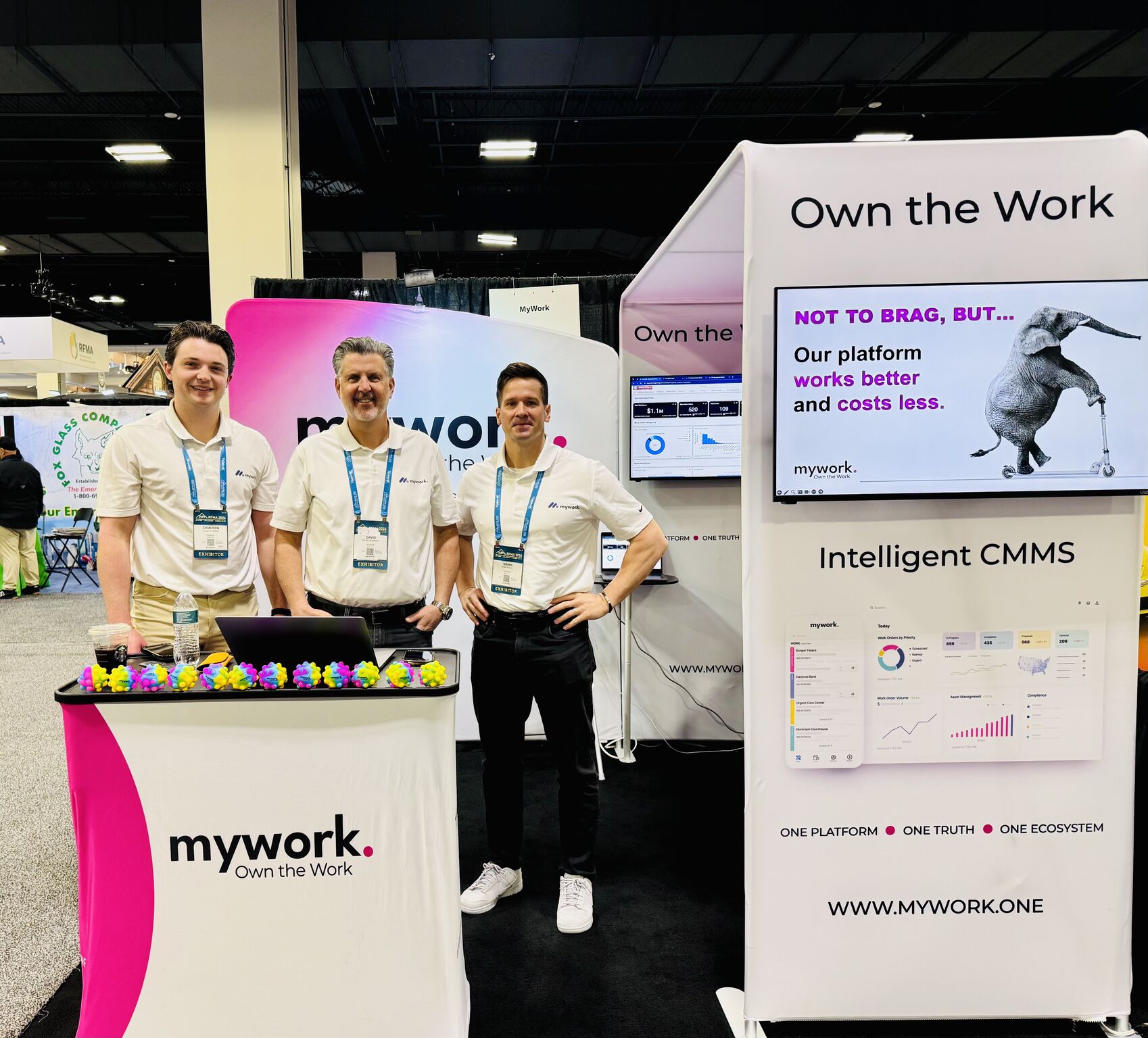
There's something about walking into the RFMA Annual Conference that just puts you in the right headspace. You're surrounded by people who genuinely care about one of the most underappreciated functions in the restaurant industry facilities. Not the menu, not the marketing, not the tableside experience. The pipes, the fryers, the HVAC units, the preventive maintenance schedules, and the hundred vendor conversations that happen every week just to keep a location running.
We were at booth 1334 this year, March 15 through 17, and what we experienced over those three days gave us a lot to think about, a lot to be excited about, and honestly, a few humbling reminders of how much work still needs to be done across the industry.
This is our honest reflection on RFMA 2026.
If you're reading this and you're not already familiar with the RFMA Annual Conference, here's the short version: it's the single largest gathering of restaurant facility management professionals in the country. More than 135 restaurant companies send their teams every year. Over 285 restaurant brands are represented on the show floor. Directors, VPs, facility managers, regional ops leads — people who are actually responsible for keeping restaurants open and running show up here to learn, compare notes, and evaluate the tools and partners they work with.
The conference isn't a trade show in the traditional sense. It's more like a very focused professional community that happens to have an exhibit hall. The education sessions are substantive. The peer exchanges are candid. And the people on the floor aren't tire-kickers — they're operators with real problems and real budgets.
That context matters for everything that follows.
What We Heard Walking the Floor
Three days of conversations with facility directors, regional managers, and operations leads across fast casual, casual dining, QSR, and multi-brand portfolio operators produced some consistent themes. We didn't go in looking to confirm what we already believed. We went in to listen.
"We're still managing work orders in spreadsheets and email threads."
This came up more than we expected. Not from small operators, either. From teams managing 200, 300, sometimes 500-plus locations. The tools they were using were either outdated legacy CMMS systems that required a degree in IT to configure, or patchwork combinations of help desk software, shared inboxes, and phone trees. The result: reactive work, not managed work.
"We don't trust our vendor data."
Vendor accountability was a recurring pain point. Facility managers described situations where a vendor closes a work order, but no one has confirmed the issue was actually fixed. Or where compliance documentation — certificates of insurance, trade licenses — lives in someone's inbox rather than the system. The gap between what vendors report and what actually happened in the field was a theme that came up in multiple conversations.
"Preventive maintenance always loses to emergency work."
This one isn't surprising if you've worked in restaurant facilities. When something breaks, it gets all the attention. PM schedules slip. Asset life shortens. The cost compounds. But knowing this and solving it are two different things, and most teams acknowledged they didn't have a system that made preventive maintenance easy enough to actually stick to.
"Leadership wants dashboards. We can't even get consistent data from our locations."
Visibility was a word we heard constantly. Not visibility as a buzzword, but as a genuine gap: facility teams that couldn't tell their CFOs how much R&M spend was going to which vendors, at which locations, and why. That disconnect has real consequences — budget conversations, staffing conversations, capital planning.
RFMA's mission is equipping restaurant facility professionals to advance their careers and their organizations, and this year's conference lived up to that. The education sessions covered predictive maintenance, HVAC management, vendor accountability frameworks, and sustainability — all topics that are becoming increasingly urgent as multi-site operators deal with aging equipment, tighter margins, and higher guest expectations.
The conference brings together professionals focused on capital projects, construction, development, engineering, operations, project management, purchasing, real estate, and sustainability, which tells you something important: facilities management in restaurants isn't just about fixing what's broken. It's a cross-functional discipline that touches almost every part of the business.
More than 100 percent of attendees have a purchasing role</cite> — meaning everyone in the room, in some capacity, influences decisions about what tools and partners their organization works with. These are not passive attendees.
The Express Exchange format — where exhibitors and restaurant attendees get two minutes of direct, structured face time — is one of the smartest networking formats we've seen at any conference. It cuts through the noise and gets to the point quickly, which felt very appropriate for an audience of people who don't have time to waste.
mywork's presence at RFMA 2026 was built around one straightforward question we wanted every visitor to be able to answer after talking to us: what would it actually look like if your facilities operation ran on one platform instead of five?
We walked through real platform demos showing how a work order moves from intake through dispatch, vendor coordination, completion, and analytics without ever leaving a single system. We talked through the distinction between a point solution that handles work orders and an intelligent CMMS for restaurants that connects facilities operations, procurement, and contractor networks into one workflow.
The framing that resonated most consistently was this: most restaurant facility teams aren't suffering from a lack of effort. They're suffering from a lack of structure. The data exists somewhere. The vendor relationships exist. The institutional knowledge exists. What's missing is a single system of record that pulls it together and makes it actionable.
mywork is built on Salesforce — which matters because it means enterprise-grade reliability, security, and integration capability out of the box. For operators who have already invested in CRM infrastructure or who need to connect facilities data to accounting, ERP, or procurement systems, that architecture makes a real difference.
We also talked a lot about scale. Our platform currently supports over 192,000 property locations, 73,000-plus building service contractors, and more than 186,000 field service technicians. For restaurant operators thinking about whether a CMMS can actually handle their footprint — whether that's 50 locations or 2,000 — those numbers tend to land.
One conversation from day two sticks out. A director of facilities from a national fast casual chain someone managing north of 400 locations- told us that his biggest operational challenge wasn't finding vendors. It was knowing which vendors were actually performing. He had compliance data scattered across three systems, performance ratings that lived in his team's collective memory, and no reliable way to make vendor decisions based on actual history.
That conversation is exactly why mywork's vendor management layer exists the way it does. Onboarding vendors, validating insurance and trade certifications, tracking work order completion rates, and tying vendor performance to asset outcomes — this isn't a nice-to-have. For a team managing hundreds of locations and dozens of vendor relationships, it's the difference between reactive chaos and confident operational management.
Another conversation: a facilities manager from a regional casual dining group described what happens every time they open a new location. The same process, repeated from scratch. New vendor relationships. New compliance documentation. New intake workflows. No playbook. mywork's modular architecture is designed for exactly this — so that as locations are added, the workflow structure doesn't have to be rebuilt every time.
We're careful about using the word "intelligent" because it's become a reflexive add-on for almost every software product that exists right now. But in the context of facilities management for restaurants, it has a specific meaning worth unpacking.
An intelligent CMMS for restaurants doesn't just log work orders. It routes them automatically based on trade, urgency, and vendor availability. It identifies when an asset has hit its repair-to-replace threshold before your team has to make that call manually. It triggers preventive maintenance schedules without waiting for a manager to remember. It converts maintenance conversations — even unstructured ones from the field — into structured work orders through AI-assisted intake, so that no request gets lost in an inbox or a phone call.
The image on our landing page framed it as moving from alignment to outcomes. Ecosystem alignment, complete visibility, actionable insight, true ownership. Those aren't marketing abstractions. They map directly to the operational gaps that restaurant facility teams described to us in Denver over three days.
Operational efficiency means MTTR goes down. Asset uptime means fewer emergency repairs. Vendor accountability means SLA compliance goes up. Actionable data means leadership conversations stop being anecdotal and start being informed. These are measurable outcomes, not promises.
RFMA 2026 reinforced something we've believed for a while: restaurant facilities management is one of the most data-rich, operationally complex functions in the industry, and it's also one of the least well-served by technology.
The operators at this conference aren't looking for another app. They're looking for a system that makes their teams more capable, their vendors more accountable, and their leadership more informed. They want to stop operating in reactive mode and start building programs that actually scale.
We think mywork is that system. Not because we built the most features, but because we started from the actual workflows that restaurant facility teams use and built outward from there. Field-first design. Modular adoption. White-glove implementation. AI-assisted work intake. A Salesforce backbone that connects to the rest of the enterprise.
We left Denver with a clear list of product conversations to continue, a handful of pilots to kick off, and a deeper understanding of what the market actually needs right now.
If you were at RFMA 2026 and stopped by booth 1334, thank you. If you didn't get a chance to connect, we'd genuinely like to. You can find us at here or reach out directly to start a conversation about what a CMMS built for restaurant facilities actually looks like in practice.
What is RFMA and who attends the annual conference?
RFMA stands for the Restaurant Facility Management Association. It's the only professional association created specifically for restaurant facility management professionals. The annual conference, held every March, brings together more than 135 restaurant companies and over 285 brands. Attendees include facility directors, regional operations managers, VPs of facilities, and professionals spanning capital projects, purchasing, sustainability, engineering, and construction.
What is a CMMS, and why does it matter specifically for restaurants?
CMMS stands for Computerized Maintenance Management System. In restaurant operations, it's the platform that manages work orders, assets, preventive maintenance schedules, vendor relationships, compliance documentation, and facilities spend. A CMMS built for restaurants, as opposed to a generic one, is designed around the specific realities of multi-site food service operations: equipment that runs continuously, health and safety compliance requirements, franchise and brand standards, vendor networks that span trades and regions, and leadership that needs real-time visibility across every location.
What makes mywork different from other CMMS platforms?
Most CMMS platforms were built for either single-site operations or industrial facilities — not multi-site restaurant portfolios. mywork is built specifically for the complexity of restaurant facilities management at scale. It connects work order management, asset tracking, vendor compliance, preventive maintenance, procurement, and analytics in a single platform built on Salesforce. It also supports AI-assisted work order intake and field-first mobile workflows, so the system works the way your team actually works rather than the other way around.
We're already using a legacy CMMS. Why would we switch?
The most common feedback we hear from teams on legacy systems is that they solve part of the problem — usually work order logging — but don't give visibility into vendor performance, asset health, or R&M spend trends. They also tend to require significant IT support to configure and don't integrate cleanly with modern enterprise systems. mywork is designed for modular adoption, so you don't have to rip and replace everything at once. You can start with what you need most urgently and expand as your program matures.
How does mywork handle vendors and compliance?
mywork includes a full vendor management layer: onboarding, certificate of insurance validation, trade license verification, coverage mapping, performance tracking, and SLA monitoring. Compliance documentation lives in the platform, not in someone's inbox. Work order completion, quality, and response time are tracked against each vendor, giving facility managers data to make informed decisions about which vendors to rely on and which to replace.
Is mywork right for a smaller restaurant group, or only for enterprise operators?
mywork is designed for multi-site operators of all sizes. The platform's modular architecture means you can adopt what's relevant to your operation now and expand over time. Whether you're managing 20 locations or 2,000, the core value is the same: one platform that connects your facilities workflows instead of five disconnected tools.
What does implementation actually look like?
We describe our implementation approach as white-glove delivery. That means our team works alongside yours to configure the platform to your existing workflows, set up roles and approvals, connect third-party integrations, and train your team. We don't hand you a license and a manual. Onboarding is built to reflect how your operation actually runs, not a generic template.
Explore our latest articles, guides, and industry updates designed to help you grow smarter and scale faster.